The 9th Habit
Blogging my exploration of the first 8 Habits.
Thursday, August 16, 2007
Is "Current Reality" the Ninth Habit? (Or maybe Habit 2.5?)
I'm in the process of moving; I am a full-time student, and I live on campus. Summer housing ends today, but my fall room isn't available until next Thursday, so I packed up everything over the past 72 hours in anticipation of leaving this afternoon. After my room inspection at 3:00 PM (to ensure that I didn't knock out a wall or steal the electrical fixtures...), I head northeast to stash my belongings in my relatives' garage, then on to the beach to finally enjoy some of the super-hot weather we've been having.
As I packed, I went through a fairly ruthless process of evaluating what I had, and getting rid of a bunch of it (more on that process tomorrow). It was both invigorating and draining, but I found I had a clearer idea of what I owned, what it meant, and what I intended to do with it. And, interestingly, this process was as inspiring as spending an afternoon reviewing and editing my mission statement, or mapping out a goal.
All of this made me wonder if the Habits, as useful as they are, are missing a step; the Habits do ask us to introspect and to be true to ourselves, but the emphasis is often on principles, values, choices, and future plans. The book frequently asks us to think about the state of things--our health, our relationship, our life relative to our mission--but this is sort of a secondary exercise. It's never the main point.
 I wonder if another Habit is called for: a habit of honest evaluation. Call it "Seeing Clearly" or "Taking Stock" or "Measuring Reality" or whatever; the point is, isn't mapping out the current reality is as important as beginning with the end in mind? Stephen Covey often talks about maps as a metaphor, stressing that we need the correct map (i.e., correct paradigms, principles, values, etc.) in order to navigate. The thing about a map, though (and I have to credit David Allen for this notion), in order for a map to be useful, you must know not only where you are going, but where you are. Dr. Covey makes the point that having a map of Los Angeles wouldn't be much help if you're trying to navigate in Chicago; I would submit that having a map of either city--or even turn-by-turn directions--would be useless unless and until you correctly identify where you are on the map. The starting point is worth considering, as it impacts us as we start to identify and make our choices (Habit 1: Be Proactive), decide on the best destination (Habit 2: Begin With the End in Mind), and take the steps to get there (Habit 3: Put First Things First).
Would this be the "Ninth Habit" to which my blog title refers? I doubt it. I actually didn't have one in mind when I started a few days ago. While I'm intrigued by this line of thought, I don't know if I would elevate this idea to the level of Habit. Maybe it's an accessory to 2, or 3. Call it Habit 2.5.
So, how do you get started with Habit 2.5? I don't know if it's best to do it before or after you finish a mission statement or goal (though it might help to start here if you're stuck), but it seems to me that it's a good thing to do before you get to Habit 3. I would begin by answering these questions:
Having just prepared for a move, I've handled almost all of my physical possessions within the past 72 hours. There's a lot of data about my life--where I am, and how far I've come--revealed in that process (much of which isn't reflected in my mission, roles, or value statements). Some of this isn't among my "First Things," but that doesn't mean it can't or won't affect my pursuit of those first things. I feel I have more of a grasp on at least part of my reality, and I'll be looking to explore more of the questions above in the days and weeks to come.
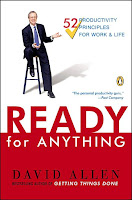
The ideas in this post were influenced by the following books; the two David Allen titles may give you more ideas for creating an accurate map of your current location.



As I packed, I went through a fairly ruthless process of evaluating what I had, and getting rid of a bunch of it (more on that process tomorrow). It was both invigorating and draining, but I found I had a clearer idea of what I owned, what it meant, and what I intended to do with it. And, interestingly, this process was as inspiring as spending an afternoon reviewing and editing my mission statement, or mapping out a goal.
All of this made me wonder if the Habits, as useful as they are, are missing a step; the Habits do ask us to introspect and to be true to ourselves, but the emphasis is often on principles, values, choices, and future plans. The book frequently asks us to think about the state of things--our health, our relationship, our life relative to our mission--but this is sort of a secondary exercise. It's never the main point.
 I wonder if another Habit is called for: a habit of honest evaluation. Call it "Seeing Clearly" or "Taking Stock" or "Measuring Reality" or whatever; the point is, isn't mapping out the current reality is as important as beginning with the end in mind? Stephen Covey often talks about maps as a metaphor, stressing that we need the correct map (i.e., correct paradigms, principles, values, etc.) in order to navigate. The thing about a map, though (and I have to credit David Allen for this notion), in order for a map to be useful, you must know not only where you are going, but where you are. Dr. Covey makes the point that having a map of Los Angeles wouldn't be much help if you're trying to navigate in Chicago; I would submit that having a map of either city--or even turn-by-turn directions--would be useless unless and until you correctly identify where you are on the map. The starting point is worth considering, as it impacts us as we start to identify and make our choices (Habit 1: Be Proactive), decide on the best destination (Habit 2: Begin With the End in Mind), and take the steps to get there (Habit 3: Put First Things First).
Would this be the "Ninth Habit" to which my blog title refers? I doubt it. I actually didn't have one in mind when I started a few days ago. While I'm intrigued by this line of thought, I don't know if I would elevate this idea to the level of Habit. Maybe it's an accessory to 2, or 3. Call it Habit 2.5.
So, how do you get started with Habit 2.5? I don't know if it's best to do it before or after you finish a mission statement or goal (though it might help to start here if you're stuck), but it seems to me that it's a good thing to do before you get to Habit 3. I would begin by answering these questions:
- What's true for you right now--in your personal life, work life, family life, spiritual life, community life, etc.?
- How are your relationships with the important people in your life?
- What's in your physical environment that you need to deal with?
- What is missing, broken, or in the wrong place (physically or mentally)?
- Are there any important conversations you're avoiding having with one of the key people in your life?
- What do you own that you're under-utilizing?
- Where is your health--physical, mental, emotional, social, and spiritual?
- What's the current status of your projects and goals?
- What is true for you that isn't addressed in your mission statement?
Having just prepared for a move, I've handled almost all of my physical possessions within the past 72 hours. There's a lot of data about my life--where I am, and how far I've come--revealed in that process (much of which isn't reflected in my mission, roles, or value statements). Some of this isn't among my "First Things," but that doesn't mean it can't or won't affect my pursuit of those first things. I feel I have more of a grasp on at least part of my reality, and I'll be looking to explore more of the questions above in the days and weeks to come.
Labels: 7 habits, david allen, getting things done, gtd, habit 2, habit 2.5, habit 3, maps, moving, paradigms, ready for anything, reality, stephen covey, the 7 habits of highly effective people
¶ Posted by Mark @ 9:55 AM | 0 comments
Monday, August 13, 2007
The First Creation: Welcome to my blog.

"All things are created twice," writes Dr. Covey in explaining "Begin With the End In Mind," the second of the 7 Habits of Highly Effective People. The First Creation is a mental creation--a blueprint, plan, vision, or program--and the Second is a physical creation. Sometimes, the First Creation is a whim or scripting from our earlier experiences, but there are always two creations. By bringing our capacities of imagination, self-awareness, independent will, and conscience to bear, we can take control of the First Creation and have much more effective second creations, or so the theory goes.
A recent post at The Covey Chronicles explains it in far greater depth, but that's the gist. In keeping with that notion, and in keeping with my renewed interest in FranklinCovey-style planning and time-management and the 7 Habits themselves, I will begin this blog with a deliberate First Creation.
The purpose of The 9th Habit will include:
Blogging seems to be a good platform to explore the Habits--Dr. Covey encourages introspection, and blogging encourages naval-gazing; it's a match made in Heaven!
In pursuit of the above purposes, I will set a number of goals. The first is a modest, but important, one:
So, that's why I'm here; why are you here?
"All things are created twice," writes Dr. Covey in explaining "Begin With the End In Mind," the second of the 7 Habits of Highly Effective People. The First Creation is a mental creation--a blueprint, plan, vision, or program--and the Second is a physical creation. Sometimes, the First Creation is a whim or scripting from our earlier experiences, but there are always two creations. By bringing our capacities of imagination, self-awareness, independent will, and conscience to bear, we can take control of the First Creation and have much more effective second creations, or so the theory goes.
A recent post at The Covey Chronicles explains it in far greater depth, but that's the gist. In keeping with that notion, and in keeping with my renewed interest in FranklinCovey-style planning and time-management and the 7 Habits themselves, I will begin this blog with a deliberate First Creation.
The purpose of The 9th Habit will include:
- To provide an outlet for my thoughts on the 7 Habits framework.
- To showcase and review certain FranklinCovey products.
- To encourage discussion about the 7 Habits framework, including limitations or challenges inherent in its assumptions, underlying worldview, or potential application.
- To document my own progress and struggles in implementing the habits and creating a meaningful, fun, and productive life.
- To attract and foster a community of diverse people with differing points of view to synergistically create not only a deeper understanding of the principles Covey teaches, but of life in general.
- To provide continuing motivation to explore the Habits and improve my implementation of them.
- To creatively supplement my income.
- To serve others who are looking for better lives by helping to spread the ideas that work for me in my life.
- To deepen my understanding of the habits by teaching the material--teaching, as Dr. Covey so often reminds his audience, is the best way to learn.
Blogging seems to be a good platform to explore the Habits--Dr. Covey encourages introspection, and blogging encourages naval-gazing; it's a match made in Heaven!
In pursuit of the above purposes, I will set a number of goals. The first is a modest, but important, one:
- To update my blog regularly (5 times per week or more) for 30 days.
So, that's why I'm here; why are you here?
Labels: 7 habits, begin with the end in mind, blogging, covey, franklincovey, goals, habit 2, stephen covey, the 7 habits of highly effective people
¶ Posted by Mark @ 8:43 AM | 0 comments
